
2nd International Workshop on
Digital and Sustainable Practices for Cultural Heritage Successfully Completed
June, 24, – July, 3 2026 | Online
The 2nd International Workshop on “Digital and Sustainable Practices for Cultural Heritage” successfully concluded, introducing participants to digital tools and workflows that support the documentation, conservation, interpretation and sustainable management of cultural heritage.
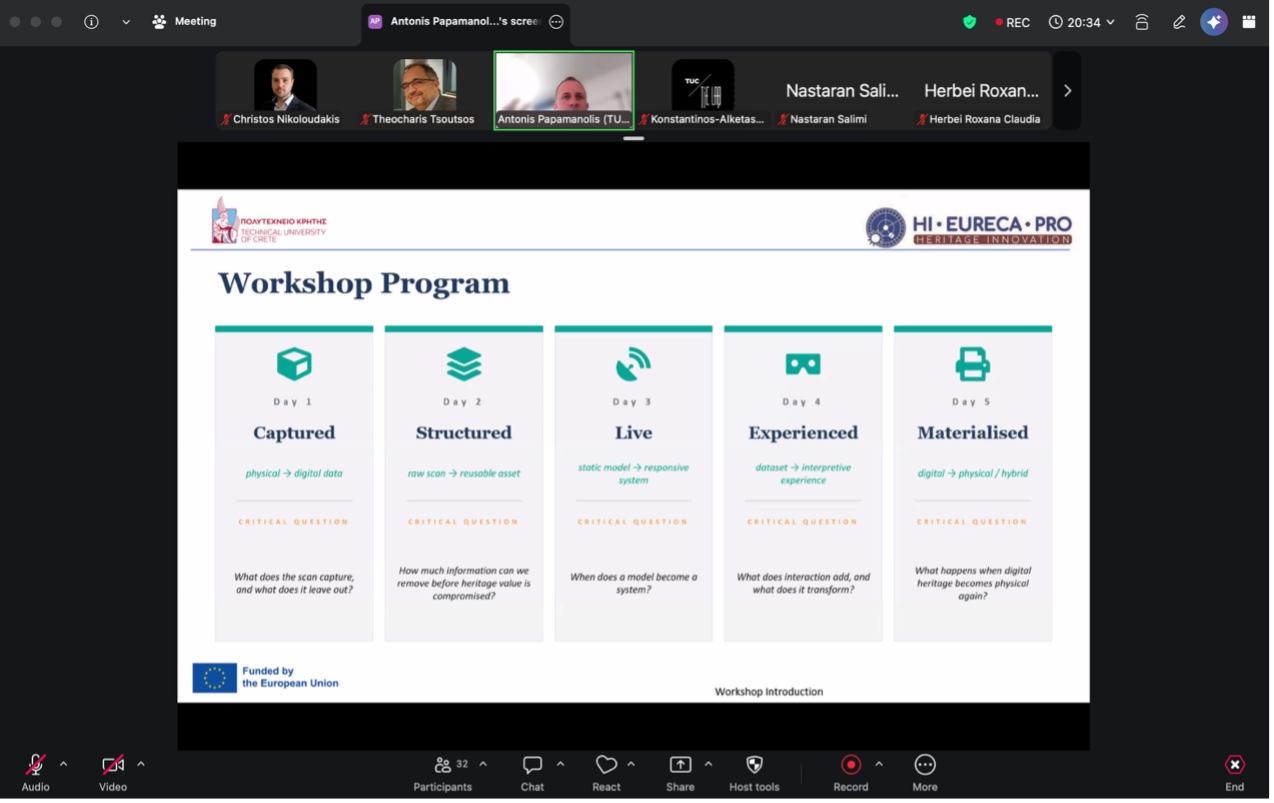
Organised by the Renewable and Sustainable Energy Systems Laboratory (ReSEL@TUC) and the Transformable Intelligent Environments Laboratory (TIE Lab) of the Technical University of Crete, within the framework of the HI-EURECA-PRO project, the workshop was delivered online through five sessions between 24 June and 3 July 2026.
Following the first workshop held in December 2025 and January 2026, the second edition provided a practical learning pathway from the digital capture of physical heritage to interactive visualisation and digital fabrication. The programme recorded 45 unique participants across its five sessions and received 87% positive feedback overall.
From physical heritage to reusable digital assets
The programme followed an interconnected five-stage workflow: Captured – Structured – Live – Experienced – Materialised.
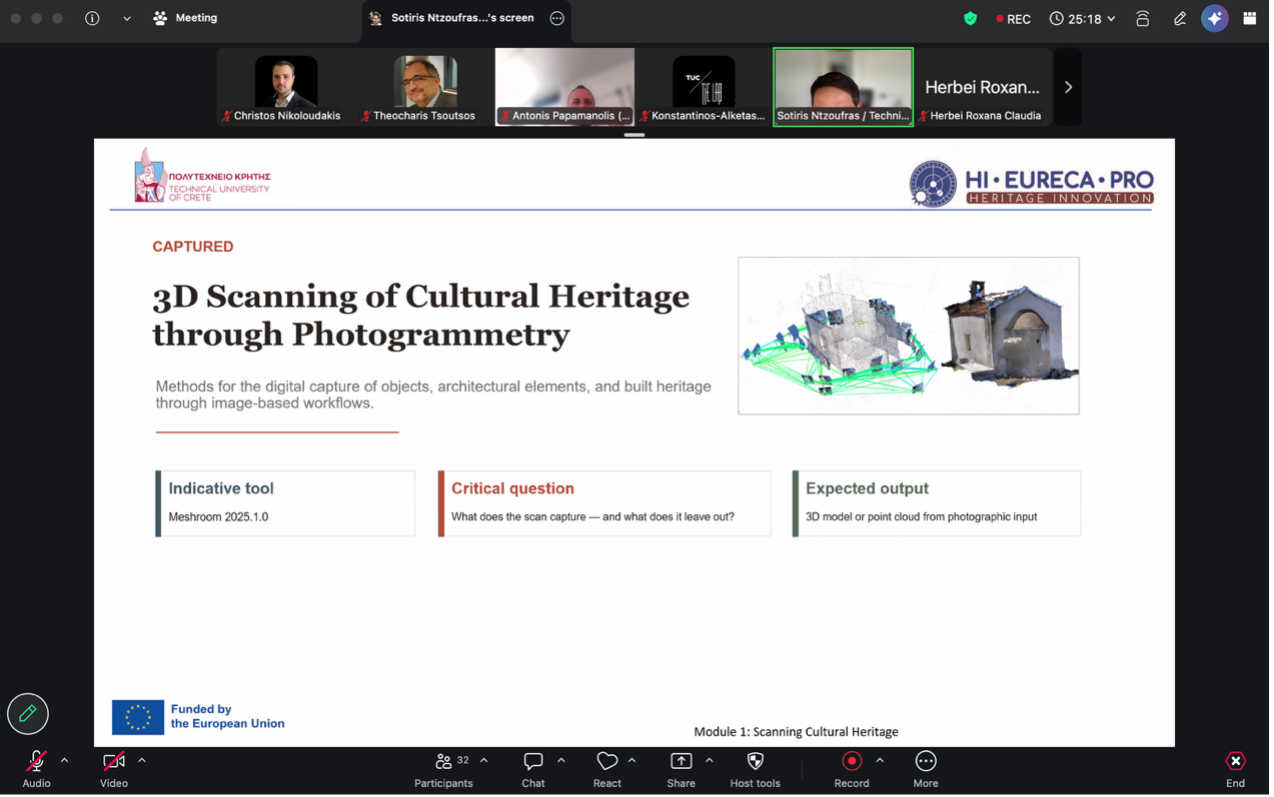
The opening session introduced 3D scanning and photogrammetry, exploring how photographic datasets can be transformed into point clouds, meshes and textured models. Practical demonstrations used the open-source Meshroom/AliceVision environment, while a case study of the Church of Agios Nikolaos in Douli illustrated how photogrammetry, field photography and traditional survey can support existing-condition documentation, including orthophotos and damage maps.
Connecting digital models with monitoring and immersive experiences
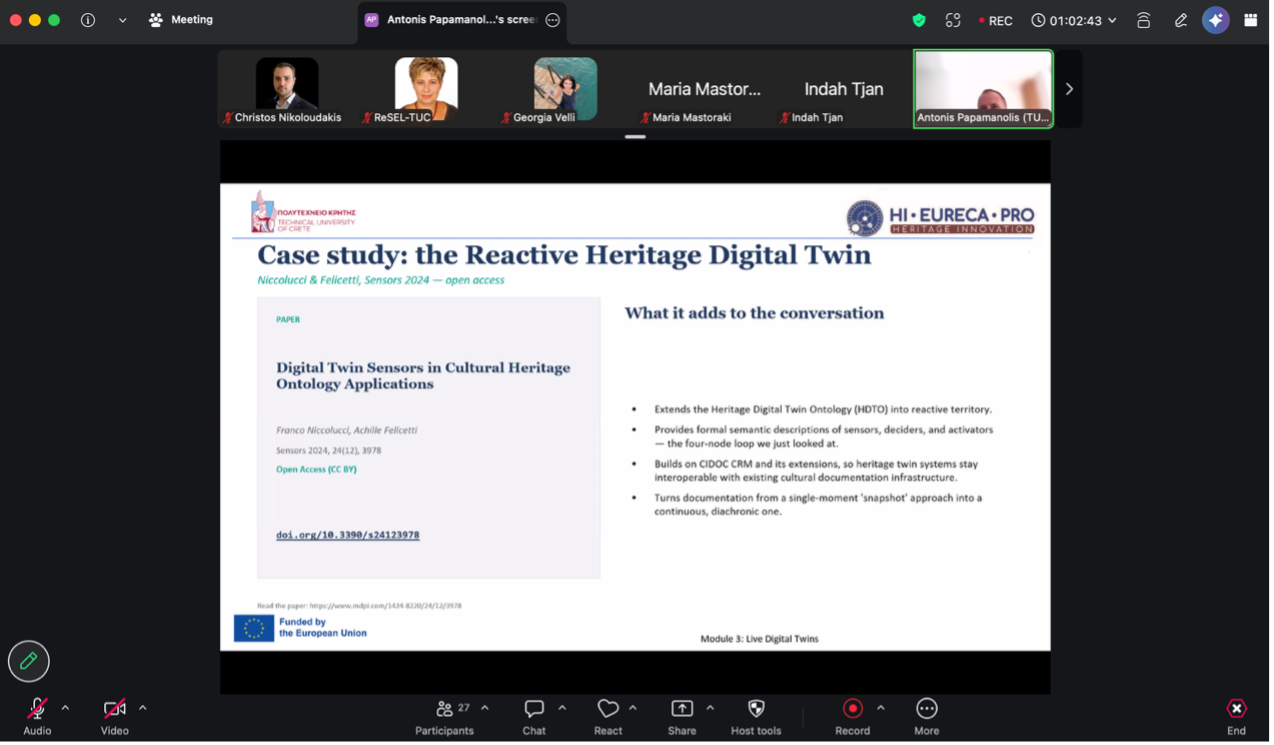
The third session explored digital twins, sensing and data governance, examining how digital models can be connected with environmental data to support preventive conservation and monitoring.
Using Tinkercad Circuits, participants were introduced to sensor-based systems without requiring physical hardware. The session also addressed responsible data management through the FAIR and CARE principles, alongside the environmental footprint of continuous sensing, data transmission and storage.
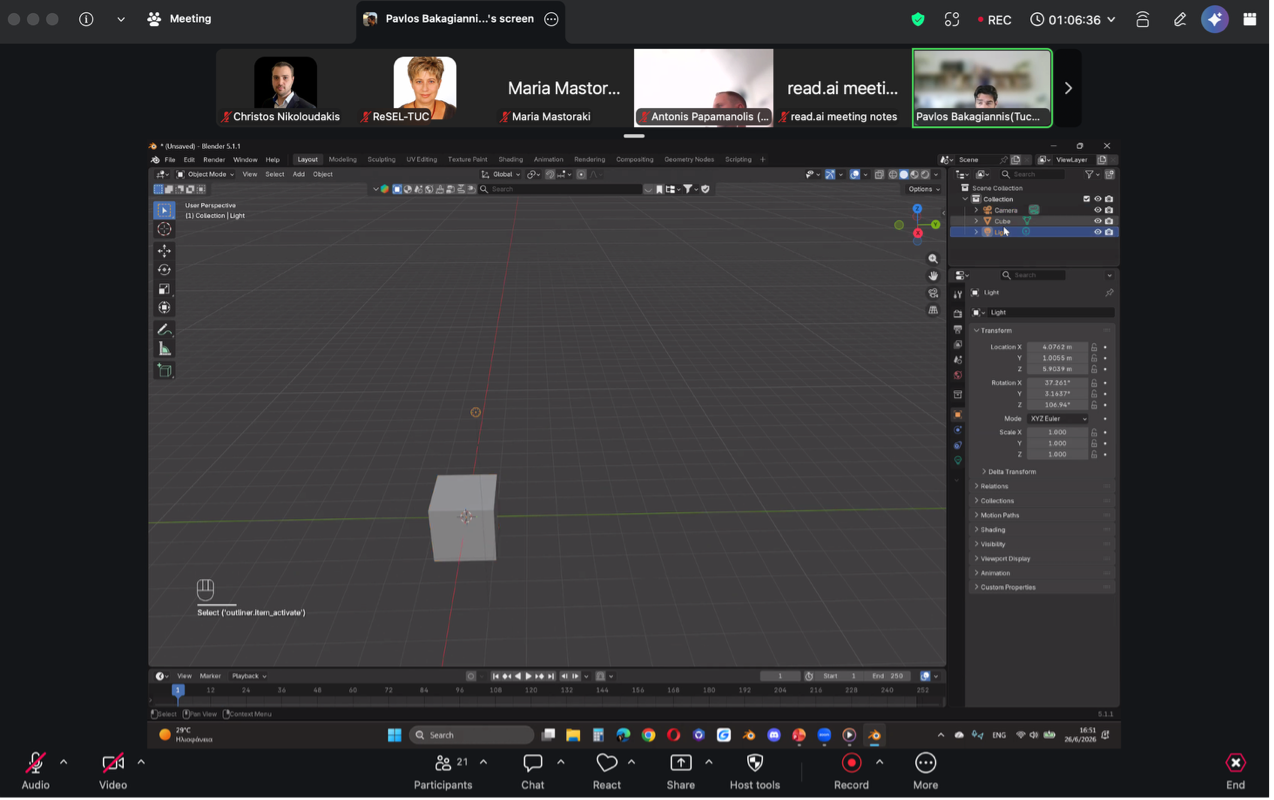
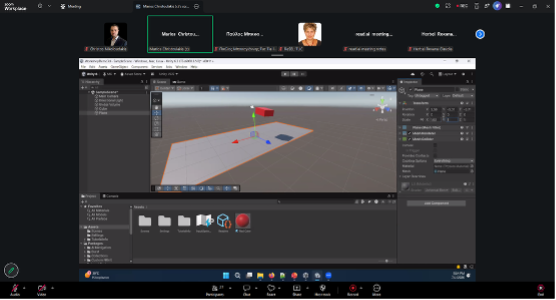
The fourth session focused on interactive visualisation and immersive heritage interpretation. Participants were introduced to Unity, exploring scene creation, materials, physics and interaction as elements of a navigable heritage environment. Applied examples included an interactive virtual tour of sites in the old town of Chania and a laser-scanning application supporting damage and restoration studies at the elementary school of Thrapsano.
From digital models to physical outputs
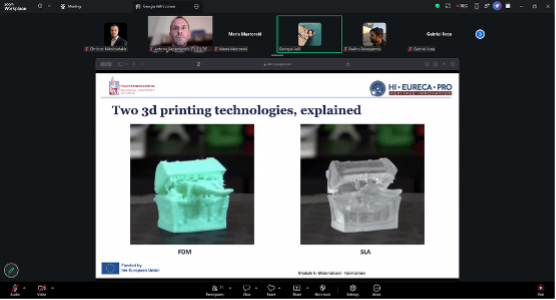
The final session completed the workflow through sustainable digital fabrication and 3D printing. Participants explored how physical replicas can support accessibility, research, reconstruction and public engagement.
Practical demonstrations using Ultimaker Cura examined how model geometry, slicing parameters and material choices influence resource consumption, printing time and the final output. Discussions also considered the cultural and ethical implications of fabrication, highlighting how decisions about scale, fidelity and materials shape the interpretation of heritage objects.
Strengthening skills for responsible digital heritage practice
Across the five sessions, the workshop combined theoretical foundations, practical software demonstrations and applied case studies with discussion of environmental, methodological and ethical considerations.
A central message was that digital technologies should serve clearly defined heritage objectives. Choices about data quality, model detail, monitoring, visualisation and fabrication need to reflect the intended use and cultural context of each application.
Delivered as part of the HI-EURECA-PRO Cultural Heritage Demo Site in Crete, the workshop supported interdisciplinary upskilling and knowledge exchange, demonstrating how connected digital workflows can contribute to heritage conservation, accessibility and sustainable management.
The course presentations and recordings have been made publicly available through the HI-EURECA-PRO website, extending the programme’s value as an open learning resource for students, researchers, practitioners and heritage stakeholders.
See more: https://www.hieurecapro.eu/digital-and-sustainable-practices-for-cultural-heritage/