
Integrating renewable energy into heritage settings
The first course, “Renewable Energy Integration in Heritage Settings”, was delivered by Prof. Theocharis Tsoutsos, HI-EURECA-PRO Project Coordinator and Director of ReSEL@TUC.
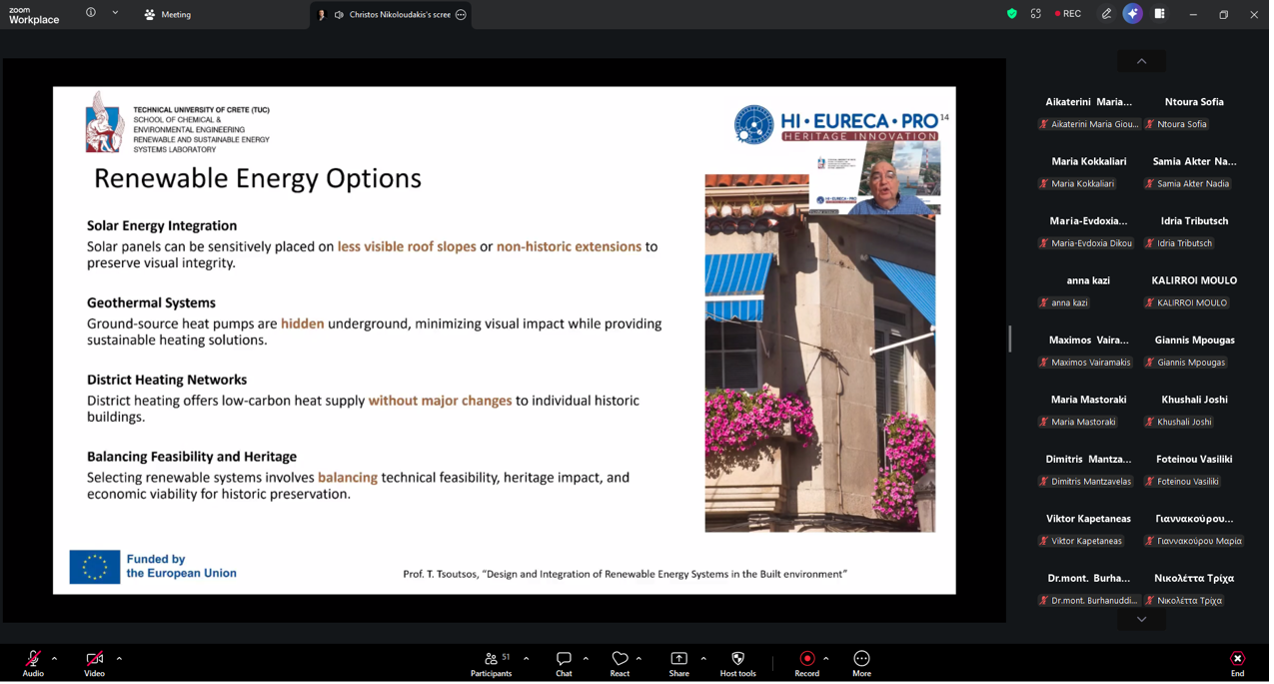
The session explored how historic buildings can contribute to the energy transition while preserving their architectural and cultural value. Particular emphasis was placed on Building-Integrated Photovoltaics (BIPV) and Building-Applied Photovoltaics (BAPV), alongside passive strategies and thermal improvements.
Best practice examples of photovoltaic integration in roofs, façades, balconies and shading systems illustrated the opportunities and constraints associated with renewable energy interventions. The session highlighted the importance of context-sensitive design, interdisciplinary collaboration and alignment between energy-performance objectives and heritage conservation requirements.
Exploring green materials for conservation
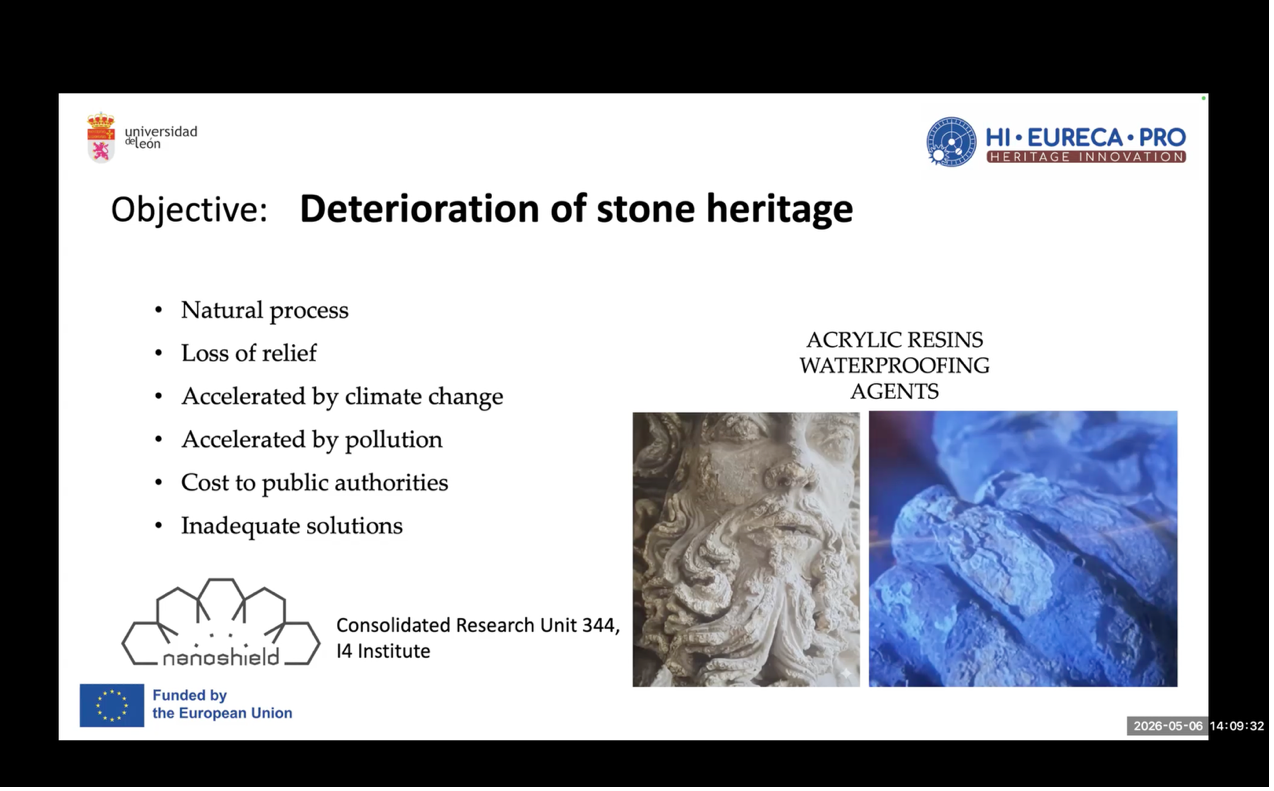
The second course, “Green Materials for Heritage Conservation”, was presented by Prof. María Fernández Raga, Professor of Applied Physics at the University of León and Director of the Nanoshield Research Group. Participants explored innovative approaches to protecting stone heritage, including coatings based on graphene oxide, cellulose, chitin and diatom-based materials. Research examples demonstrated how experimental testing and non-destructive assessment techniques can help evaluate weathering resistance, coating performance and the preservation of aesthetic qualities. A central message was that sustainable conservation materials must be assessed beyond their environmental credentials: compatibility with historic substrates, durability, and economic and social considerations are also essential to their suitability.
Applying life-cycle thinking to conservation decisions
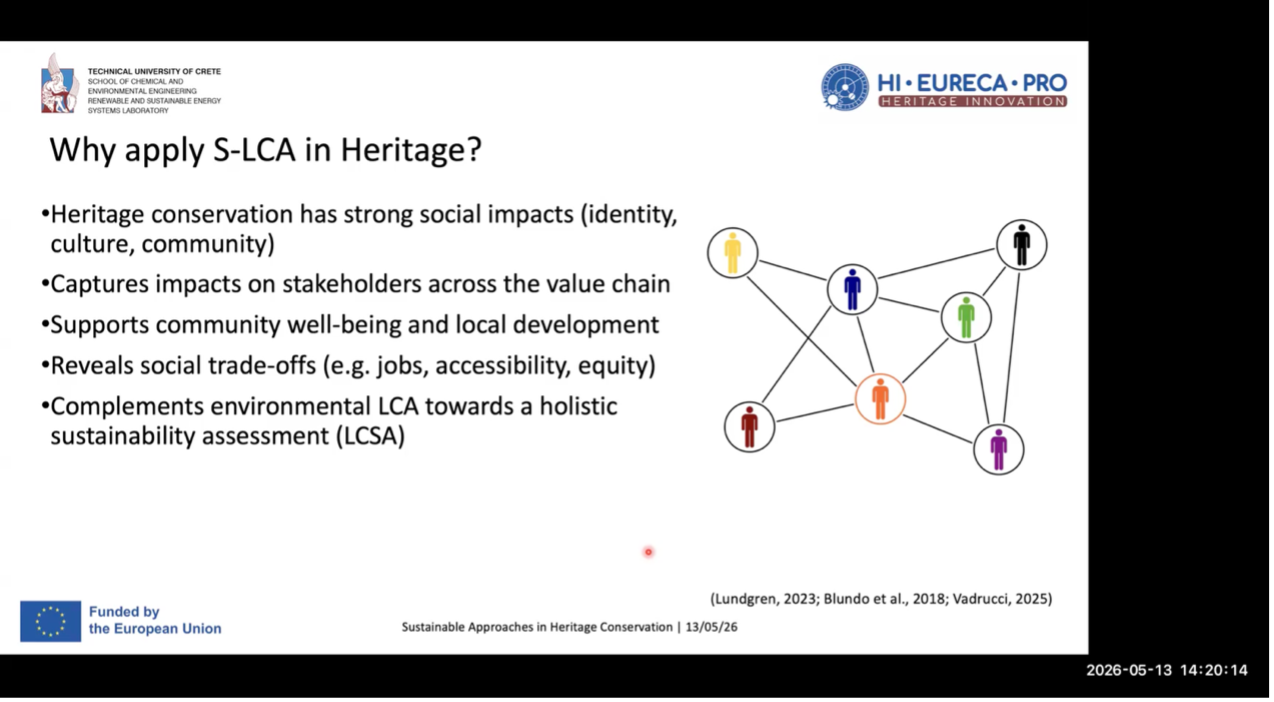
The third course, “Life Cycle Assessment (LCA) and Social-LCA in Heritage Conservation”, was delivered by Christos Nikoloudakis, Research Associate at ReSEL@TUC. The session introduced tools for assessing the environmental and social impacts of conservation interventions, considering materials, energy use, maintenance, treatments and waste throughout their life cycle. Case studies examined traditional and modern restoration materials, stone consolidants and the adaptive reuse of historic buildings. These examples illustrated how life-cycle approaches can reveal trade-offs between embodied carbon, durability and long-term performance. The discussion also explored how Social Life Cycle Assessment can complement environmental assessment by considering employment, local communities, accessibility and cultural continuity.
Strengthening interdisciplinary knowledge for sustainable heritage
Across the three courses, a shared conclusion emerged: sustainable heritage conservation requires decisions that balance environmental performance with heritage value, material compatibility, durability, energy efficiency and social considerations. Appropriate solutions depend on the specific characteristics and needs of each conservation context. By connecting expertise in renewable energy, materials science and sustainability assessment, the programme supported the HI-EURECA-PRO Cultural Heritage Demo Site’s objectives of strengthening interdisciplinary skills and knowledge transfer.
The course presentations and recordings have been made publicly available through the HI-EURECA-PRO website, extending the programme’s value as an open learning resource for students, researchers, practitioners and heritage stakeholders.
See more https://www.hieurecapro.eu/sustainable-approaches-in-heritage-conservation-2/