
Explore the materials, artefacts and stories that make up the Digital Mining Museum’s growing archive.
About the Collections
The Digital Mining Museum brings together a diverse body of heritage materials that document the full spectrum of mining life in the Jiu Valley — from the machinery deep underground to the communities that grew around the pithead. The collections are organised into four interconnected thematic areas, each capturing a different dimension of this shared heritage.
All materials have been gathered through on-site fieldwork, institutional partnerships, archival research and direct community engagement. They are presented digitally to ensure long-term preservation and free public access, in line with the open science principles of the HI-EURECA-PRO project.
Industrial Heritage
Equipment, Tools, Extraction Systems and Transport Mechanisms
The industrial collections document the technical world of Jiu Valley mining — the physical means by which coal was extracted, processed and transported across more than a century of operation.
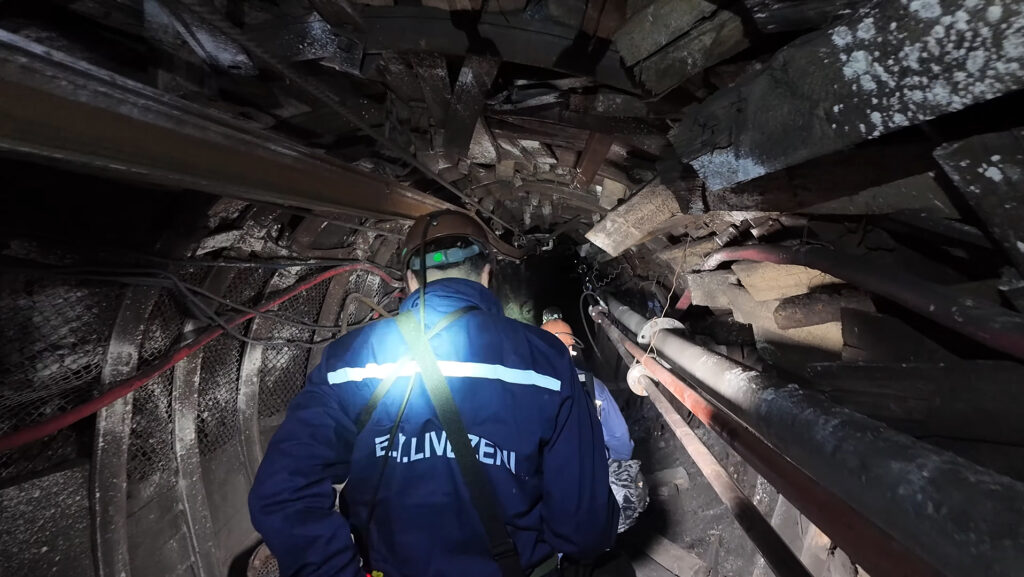
This collection includes digitised records and 3D representations of:
Extraction equipment — coal cutters, pneumatic picks, drilling machines and hydraulic supports used in underground workings at different periods of the mine’s history
Haulage and transport systems — underground mine cars (vagonete), conveyor systems, shaft headframes and winding engines that moved coal and workers between the surface and the working faces
Ventilation infrastructure — fan installations and air management systems critical to safe underground operation
Surface processing machinery — coal sorting, washing and preparation plant equipment found at the pithead
Hand tools and personal equipment — the lamps, helmets, picks and everyday objects carried by miners into the underground, many of which were donated or described by former workers and their families
Where physical access to equipment has been possible, objects have been captured as interactive 3D models allowing users to examine them in detail from every angle. Archival photographs, technical drawings and engineering specifications complement the 3D representations, providing historical context and technical depth.
Architectural Heritage
Mining Buildings, Shafts, Processing Facilities and Industrial Landscapes
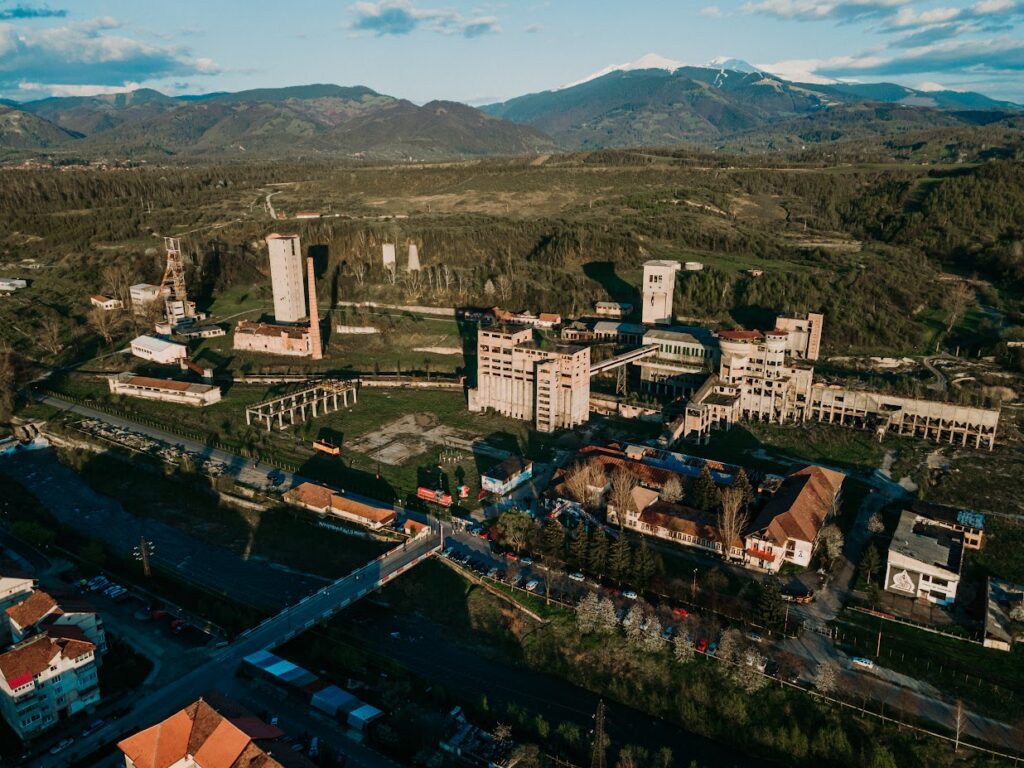
The architecture of mining is monumental in its own right — and deeply vulnerable. Across the Jiu Valley, significant structures from the peak years of coal production survive in various states of preservation, while others have already been demolished. The museum’s architectural collections work to document this built environment before it disappears.
The collection encompasses:
Shaft headframes and winding towers — the iconic vertical structures that defined the skyline of every mine, some of which are now listed as heritage monuments
Engine houses and machine rooms — the buildings that housed the powerful winding and pumping engines essential to mine operation
Pithead baths and welfare buildings — facilities built for miners to wash and change, often representing significant investments in worker welfare during the socialist period
Administrative and management buildings — offices, engineering departments and technical service blocks that formed the organisational core of the mine enterprise
Processing and preparation plants — the industrial complexes where extracted coal was sorted, washed and prepared for dispatch
Mine landscapes and spatial organisation — the overall layout of mine sites, including the relationship between underground workings, surface facilities and the surrounding urban fabric
Virtual tour environments allow users to navigate surface areas and selected underground galleries of Livezeni Mine, experiencing the spatial reality of the site in a way that photographs alone cannot convey. Georeferenced maps and historical aerial imagery further contextualise the architecture within its landscape setting.
Social and Cultural Heritage
Workers’ Colonies, Traditions and Identity
Mining in the Jiu Valley was not only an industrial activity — it was the foundation of an entire way of life. The social and cultural collections document the human world that grew up around the mines: how people lived, what they valued, how they organised themselves and what they remember.
This collection draws together:
Oral history testimonies — recorded interviews with former miners, engineers, safety officers, trade union members and family members, capturing first-hand accounts of underground work, daily life, major historical events and the experience of mine closures. These testimonies are among the most irreplaceable elements of the collection, preserving knowledge and memory that exists nowhere else
Workers’ colony documentation — the residential districts built specifically to house mining families, with their distinctive architectural character and strong community identity, documented through photographs, maps and residents’ accounts
Cultural traditions and collective life — miners’ festivals, sports clubs, cultural associations, music and folklore traditions that formed the social fabric of Jiu Valley communities
Labour history and organisation — documentary records and testimonies relating to working conditions, trade union activity and the major events that shaped the collective identity of Jiu Valley miners, including the significant miners’ strikes of the post-communist period
Personal and family collections — photographs, documents and objects contributed by former mining families, offering intimate glimpses into everyday life that complement the official institutional record
The social and cultural collections are central to the museum’s commitment to representing mining heritage as a living human story, not merely a technical or economic history.
Contemporary Transformation
Repurposing Projects, Creative Industries and Green Transition Initiatives
Mining heritage does not end with the closure of the mines. The final thematic collection documents the ongoing transformation of the Jiu Valley — the ways in which communities, institutions and creative practitioners are reimagining former mining sites and identities for a post-coal future.
This collection covers:
Heritage conservation and adaptive reuse projects — initiatives to protect, restore and find new uses for significant mine structures, including proposals and completed conversions across the region
Creative and cultural industries — artistic projects, film productions, photography commissions and cultural events that engage with the mining past as a source of creative inspiration and community reflection
Green transition and circular economy initiatives — projects exploring how former mine sites, infrastructure and expertise can be repurposed in the context of Romania’s energy transition and broader European green economy goals
Tourism and heritage-led development — examples of heritage tourism projects in the Jiu Valley and comparable post-mining regions, illustrating how industrial heritage can become an economic and cultural asset
Community memory projects — local initiatives to document, celebrate and transmit mining heritage to younger generations, often led by former miners’ associations, schools or cultural organisations
This section of the collection deliberately bridges past and present, positioning the Digital Mining Museum not only as a record of what was, but as a contributor to the conversation about what the Jiu Valley can become.
A Growing Collection
The collections presented here represent the first phase of the Digital Mining Museum’s holdings. As the HI-EURECA-PRO project progresses, new materials will be added on a rolling basis — including content from additional mine sites across the Jiu Valley (Petrila, Lupeni, Vulcan and others), expanded oral history recordings, higher-resolution digitised documents and new 3D models.
Institutions, community organisations or individuals who hold materials — photographs, documents, objects or memories — related to Jiu Valley mining heritage and who would like to contribute to the collection are warmly invited to get in touch via the Contact page.