
The museum was conceived as a response to a pressing challenge common across many post-industrial regions of Europe: how to preserve the memory, identity and material culture of mining communities at a time when the physical sites themselves are deteriorating, disappearing or being repurposed. Rather than waiting for heritage to be lost, the Digital Mining Museum brings these spaces and stories into a permanent, accessible digital form.
Mission
To present and safeguard the mining heritage of the Jiu Valley and partner regions through digital technologies.
The Jiu Valley in Romania represents one of the most significant coal-mining landscapes in Central and Eastern Europe. For over a century, it was the backbone of national energy production and the heart of a dense, proud working-class culture. The communities who lived and laboured here created a rich heritage — technical, architectural, social and cultural — that deserves to be remembered, studied and shared. The museum’s mission is to ensure that this heritage does not disappear with the mines that shaped it.
Vision
A virtual space where history, culture and innovation meet — supporting learning, participation and sustainable regional development.
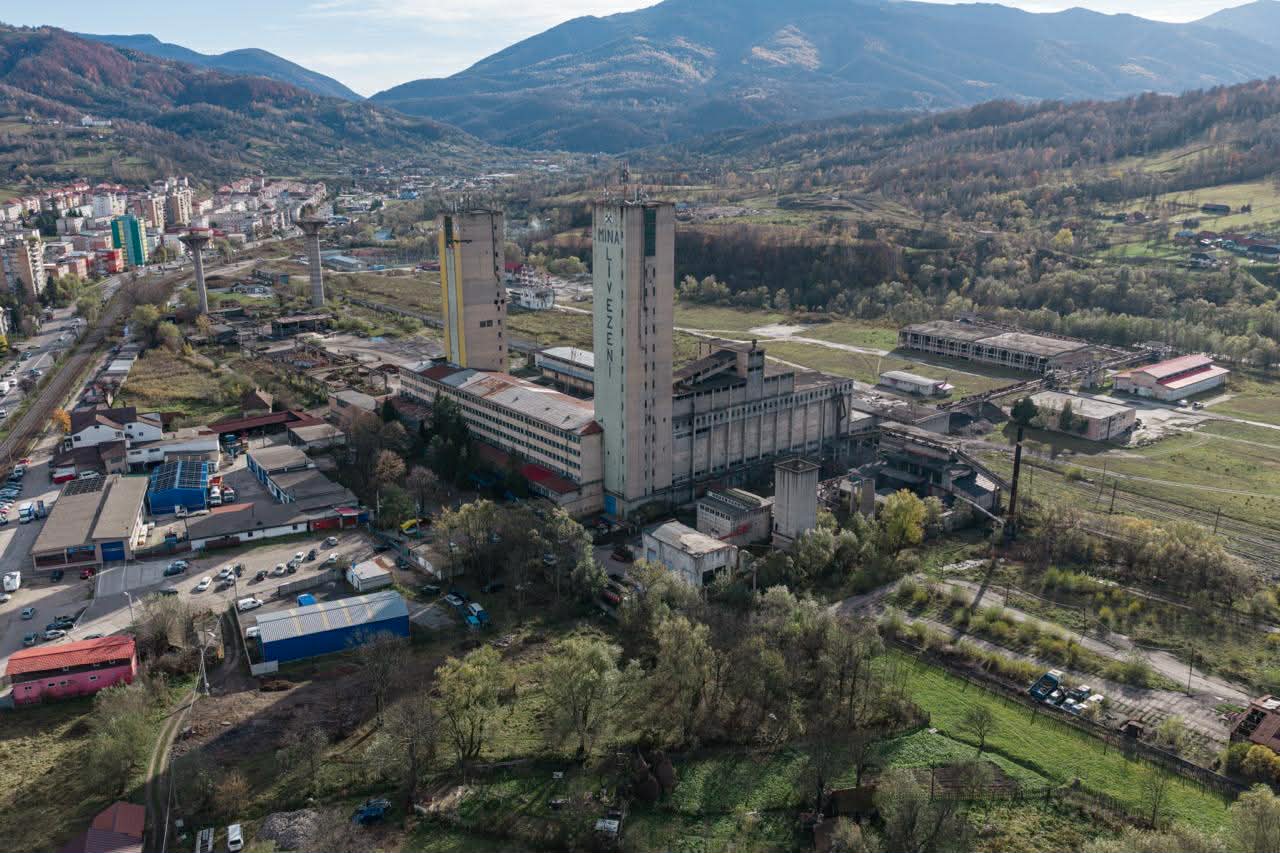
The Digital Mining Museum envisions a future where heritage institutions are not bounded by physical walls or geographic access. A former miner’s grandchild in Bucharest, a researcher in Brussels, a school student in Cluj — all should be able to step inside Livezeni Mine, explore its galleries, examine its machinery, and hear the voices of those who worked there. At the same time, the museum serves as a bridge between the past and the future, connecting heritage narratives with contemporary questions about just transition, circular economy and community resilience.
Context — The Jiu Valley and Its Mining Heritage
The Jiu Valley (Valea Jiului) stretches across the Carpathian mountains in Hunedoara County, Romania, and encompasses a cluster of mining towns — Petroșani, Petrila, Lupeni, Vulcan, Aninoasa and Uricani — whose identities are inseparable from coal. Mining in the valley dates back to the mid-19th century, reaching its peak during the socialist period when tens of thousands of workers were employed underground.
Since the 1990s, the region has undergone a profound and often painful transformation, with mine closures, economic decline and significant demographic loss. Yet the legacy of mining culture — its technical knowledge, its social solidarity, its architecture and its human stories — remains vivid among those who lived it, and increasingly recognised as a heritage of national and European significance.
The Digital Mining Museum responds to this moment by preserving what survives, collecting what can still be gathered, and making it all accessible before it is lost.
Interactive Virtual Tours
Explore the underground and surface environments of Jiu Valley mines in 360° immersive tours built from real on-site photography. The current version features Livezeni Mine in full detail, with users able to navigate freely through different areas of the site, access contextual information at points of interest, and engage with the space as an active explorer rather than a passive viewer.
Interactive 3D Models
Key elements of mining infrastructure — machinery, extraction systems, structural components and underground spaces — have been reconstructed as interactive 3D models. These allow users to examine objects and environments from every angle, zoom into technical details, and gain an understanding of how mining technology worked that no photograph alone can convey.
Digitised Archives
The museum hosts a growing collection of digitised primary source materials, including historical photographs, engineering drawings, topographic maps, administrative documents and technical records. These materials have been gathered from partner institutions, local archives and community contributors, and are presented with contextual metadata to aid understanding.
Educational Modules
Purpose-built educational content connects the heritage materials to broader learning objectives in history, geography, engineering, social studies and environmental science. These modules are designed to be usable by teachers, students and self-directed learners, and are aligned with the educational outreach goals of the HI-EURECA-PRO project.
Community Stories
One of the most distinctive features of the museum is its collection of oral history testimonies from former miners, engineers, community leaders and local residents. These first-hand accounts bring a human dimension to the technical and architectural heritage, capturing knowledge, memories and cultural identity that cannot be found in any official document.
Innovation Corner
The museum does not only look backwards. The Innovation Corner connects the mining heritage of the Jiu Valley with forward-looking themes — including circular economy initiatives, green transition projects and creative industry developments — that are reshaping the region today. This section positions heritage not as a relic, but as a resource for imagining and building sustainable futures.
Part of a Wider European Network
The Digital Mining Museum does not stand alone. As a demonstration site within HI-EURECA-PRO, it is part of a European network of heritage innovation sites spanning cultural, industrial and mining heritage across multiple countries. This network enables the exchange of methodologies, tools and good practices — meaning that the approaches developed for the Jiu Valley can inspire and inform similar initiatives elsewhere in Europe, and vice versa.
The museum also feeds into the project’s Digital Twin Hub (DT Hub), a shared infrastructure for heritage digital twins that allows data, models and experiences to be linked, compared and reused across sites.